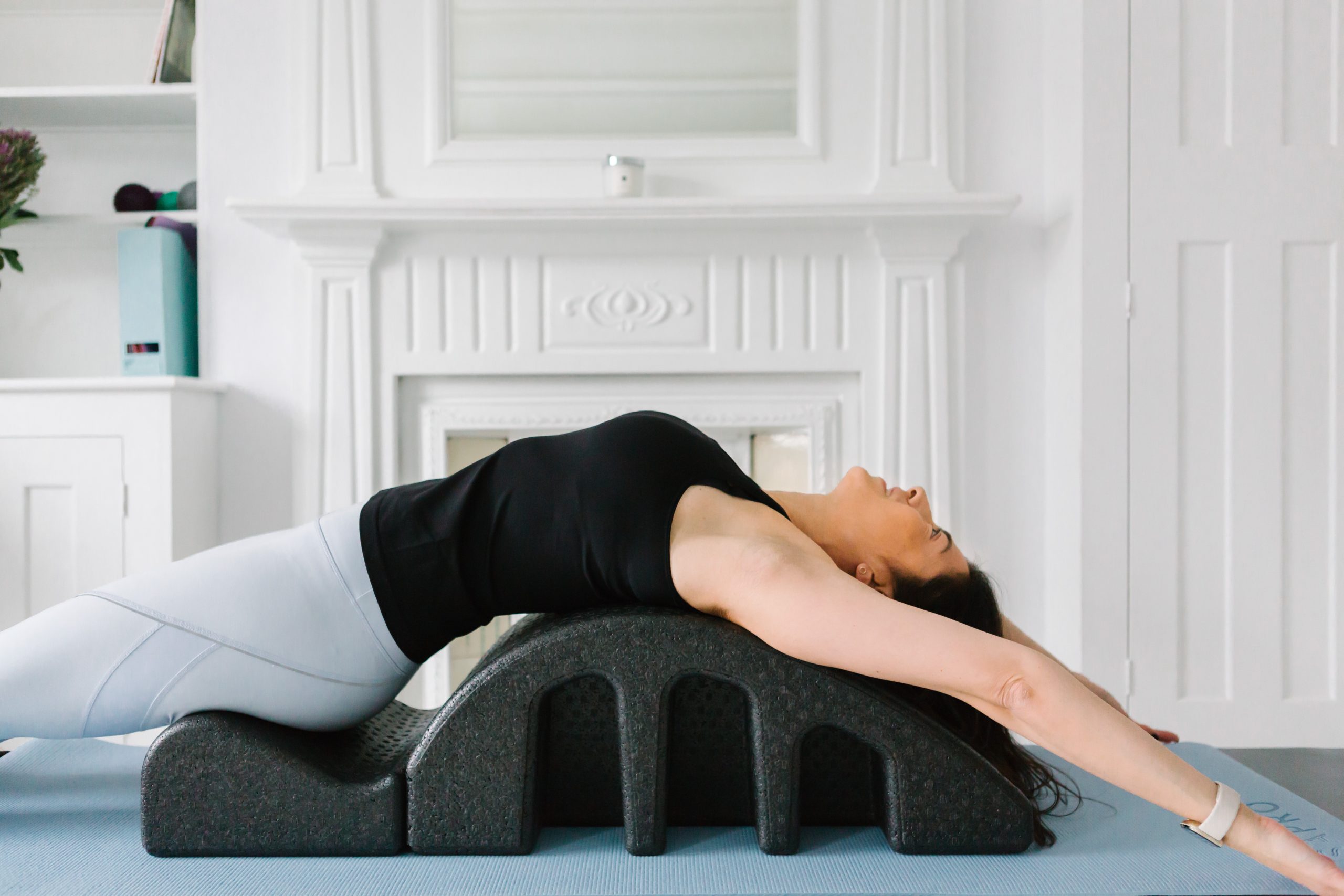
If you’ve ever Googled “how to fix back pain,” you’ll know the results are overwhelming — and often contradictory. Rest more. Move more. Stretch. Strengthen. See a physio. Try yoga. It’s exhausting, especially when you’re already in pain.
What I’ve seen over eight years of working with clients at my Clapham studio is this: most back pain comes down to the same handful of causes. And Pilates — done well, done specifically for your body — addresses them directly.
Here’s what actually helps, and why.
The Real Cause of Most Back Pain
Many people assume back pain means something is broken, worn out, or damaged beyond repair. Sometimes that’s true. But far more often, the cause is functional — meaning it’s about how your body is moving, or not moving.
The most common culprits I see:
- Weak deep core muscles — the small stabilising muscles around the spine that most gym exercises don’t target
- Tight hip flexors — often from long hours sitting at a desk, which tilts the pelvis and loads the lower back
- Muscular imbalance — favouring one side of the body over years, creating uneven tension in the spine
- Poor posture habits — particularly in the thoracic spine (mid-back), which compensates when the lower back or neck is restricted
None of these show up clearly on a scan. But they show up immediately when I watch someone move.
Why Pilates Works for Back Pain
Pilates was originally developed as a rehabilitation system — not a fitness trend. Joseph Pilates designed it in the early 20th century specifically to rebuild strength and alignment in injured and weakened bodies. That origin matters.
What makes Pilates particularly effective for the back:
It targets the deep stabilisers. Exercises like the hundred, single leg stretch, and spinal articulation on the Reformer activate the transverse abdominis and multifidus — the muscles that wrap around the spine and hold it stable. These are the muscles that switch off when we’re sedentary, and their absence is often what causes pain.
It teaches spinal articulation. Most people with back pain have a spine that moves as one rigid unit rather than segment by segment. Pilates systematically works through each vertebra, restoring mobility and reducing the load on any one area.
It corrects imbalance. Because every exercise can be done unilaterally (one side at a time), I can identify and address asymmetries that have built up over years — often without the client even knowing they were there.
It builds strength without impact. Running, weightlifting, and many gym exercises load the spine in ways that can aggravate pain. The Reformer uses spring resistance, which is progressive, controllable, and gentle on the joints.
What I Do Differently: One-to-One Assessment
In a group Pilates class, the instructor gives general cues to a room. They can’t watch your spine specifically. They can’t adjust your exercise if something isn’t working for your body. And they almost certainly can’t see the subtle imbalance in your left hip that’s been quietly loading your lower back for a decade.
In my Clapham studio, every new client starts with a movement assessment. I look at how you stand, how you hinge, how your pelvis moves. From that, I build a programme specifically for your back — not a generic back pain programme, but one designed around the exact weaknesses and restrictions I find in your body.
Many of my clients come to me after physiotherapy. They’ve done the acute work — reduced the inflammation, addressed the immediate injury — and now they need to build the strength and stability to stop it coming back. That’s precisely where private Pilates excels.
How Long Does It Take to See Results?
This varies, but in my experience most clients with non-acute back pain start to feel a meaningful difference within four to six sessions. Not just reduced pain — but a different relationship with their body. More awareness of how they’re holding themselves at a desk. A feeling of length and space in the spine after a session. Less bracing and guarding.
The clients who see the fastest results are the ones who commit to twice a week in the early stages. Building neuromuscular awareness — teaching the body to stabilise correctly — takes repetition. Once that foundation is there, once a week is often enough to maintain and continue progressing.
Is Pilates Right for Your Back Pain?
Pilates is appropriate for most types of non-acute back pain, including:
- Chronic lower back pain
- Disc bulge or herniation (at the right stage of recovery)
- Post-operative recovery from spinal surgery (once cleared by your consultant)
- Sacroiliac joint dysfunction
- Postural back pain from desk work
- Back pain related to scoliosis
If your pain is acute — recent onset, severe, or accompanied by neurological symptoms like tingling or numbness — please see your GP or physiotherapist first. I always work alongside any medical guidance you’ve been given, and I’m happy to liaise with your physio if that’s helpful.
Ready to Start?
If you’re in Clapham or South West London and you’ve been managing back pain for longer than you should have to, I’d love to help. Every new client starts with a first session that’s part conversation, part movement assessment — so we can understand exactly what your back needs before we begin.
Esin Parker is a Polestar Pilates Certified Instructor with over eight years of experience working with clients in Clapham, London. She specialises in one-to-one Reformer Pilates for back pain, post-operative recovery, and executive clients.