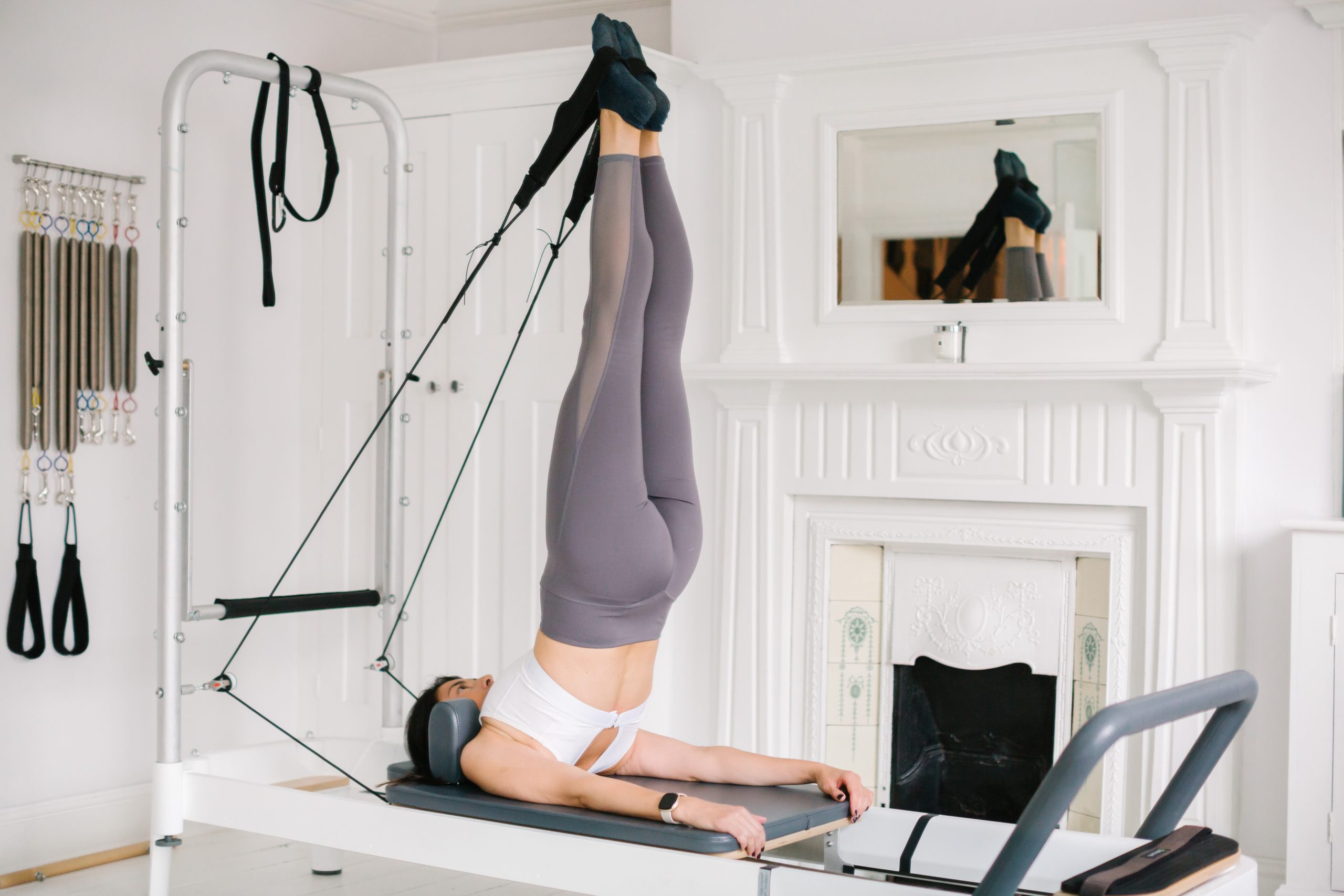
If you’re a woman in your 40s or 50s and you’ve started to notice your body changing — more stiffness in the morning, a nagging ache in your lower back, a sense that your posture isn’t what it used to be — you’re not imagining it. And you’re not alone.
The good news is that these changes are largely addressable. Not by working harder, but by working smarter. And in my experience of eight years working with women at my Clapham studio, Pilates — done privately and precisely — is one of the most effective tools available.
Here’s why.
What Changes in the Body After 40
Understanding what’s happening in your body makes it easier to understand why Pilates helps so specifically.
Muscle mass begins to decline. From around 35, we naturally lose muscle mass — a process called sarcopenia. Without active resistance training, this accelerates through the 40s and 50s. Less muscle means less metabolic activity, less joint support, and a higher risk of injury from everyday movements.
Bone density decreases. This accelerates significantly around the perimenopause and menopause, when oestrogen levels drop. Lower bone density increases the risk of osteoporosis and fractures — particularly in the spine, hips and wrists. Weight-bearing and resistance exercise are two of the most effective ways to slow this process.
Posture shifts. Years of desk work, driving, and carrying children take their toll. The thoracic spine (mid-back) tends to round forward. The head shifts forward of the shoulders. The hip flexors tighten. These postural changes aren’t just aesthetic — they affect breathing, digestion, pelvic floor function and the load placed on the spine.
The pelvic floor weakens. Pregnancy, childbirth, and hormonal changes all affect pelvic floor function. Weakness here contributes to incontinence, prolapse risk, and a lack of deep core stability — which in turn affects everything from back pain to balance.
How Pilates Addresses Each of These
Building strength without strain. The Reformer uses spring resistance — progressive, controllable, and joint-friendly. Unlike heavy weights or high-impact exercise, it builds genuine functional strength without loading the joints in ways that can cause injury. For women who haven’t exercised in a while, or who are coming back after injury or surgery, it’s an ideal entry point. For those who are already active, it fills the gaps that other forms of exercise leave.
Protecting bone density. Reformer Pilates is weight-bearing and resistance-based — both of which are proven to stimulate bone remodelling. It won’t replace dedicated bone-loading exercise entirely, but as part of a broader movement practice it contributes meaningfully to bone health. I’m increasingly focused on this area with my clients and have a particular interest in serving women navigating perimenopause and menopause.
Restoring posture. This is where Pilates is almost unparalleled. The method systematically addresses the postural patterns that develop over decades — opening the chest, lengthening the hip flexors, strengthening the muscles between the shoulder blades, and teaching the spine to move with articulation rather than rigidity. Clients regularly tell me they feel taller after a session. Over time, that feeling starts to stay.
Strengthening the pelvic floor and deep core. Pilates has a long history of use in post-natal rehabilitation for exactly this reason. The deep core work — particularly on the Reformer — engages the pelvic floor, transverse abdominis and diaphragm as an integrated system. This isn’t about doing kegels in isolation; it’s about training the whole system to work together under load.
Why One-to-One Makes a Difference at This Stage
Group Pilates classes are better than nothing. But at this stage of life, when your body has a specific history — pregnancies, injuries, surgeries, decades of postural habits — a generic class simply can’t address what you actually need.
In a private session at my Clapham studio, I start with a movement assessment. I look at how you stand, how you hinge, how your spine moves. I ask about your history. And from that, I build a programme specifically for your body — not a programme for “women over 40” in general, but one designed around the exact patterns and priorities I find in you.
The women I work with at this stage of life often say the same thing: they wish they’d started sooner. Not because they’ve been doing something wrong — but because having someone look at their body specifically, rather than following a class, changes things faster and more fundamentally than they expected.
What About Menopause?
I’m 49 and going through menopause myself — so this isn’t something I know only from working with clients. I know it from the inside. The joint stiffness that appears overnight. The fatigue that doesn’t quite match how much you’ve slept. The changes in body composition that happen almost regardless of what you eat or how much you move.
Exercise is one of the most well-evidenced interventions for managing these symptoms, and Pilates fits particularly well because it’s adaptable to how you feel on any given day.
I work with a number of clients who are navigating this transition, and I’m conscious of adapting sessions around energy levels, joint sensitivity, and the specific physical priorities that come with this stage — including bone health, pelvic floor function, and maintaining lean muscle mass.
If this is where you are, know that you don’t need to wait until things feel more stable to start. This is precisely the right time.
How Quickly Will You See Results?
Most clients notice something within the first three or four sessions — not dramatic transformation, but a sense of more space in the body, less tension, better awareness of how they’re holding themselves. Meaningful postural change takes longer — typically three to six months of consistent work — but it does come.
The clients who progress fastest are those who commit to twice a week in the early stages. Once the foundation is there, once a week is usually enough to maintain and build.
Start Where You Are
You don’t need to be fit, flexible, or experienced to begin. You just need to show up. Everything else we work out together from your first session.
If you’re based in Clapham or South West London and you’d like to talk about what Pilates could do for your body at this stage of life, I’d love to hear from you.
Esin Parker is a Polestar Pilates Certified Instructor with over eight years of experience working with women in Clapham, London. She has a particular interest in strength, bone health and movement for women in perimenopause and menopause.